APKDock Logo
Chapters
share
Ariel's Quiet Light Novel Cover

Ariel's Quiet Light

Ariel, brilliant and painfully beautiful, lives in shadow after losing her mother at five. Re-homed to a father who should have protected her but instead emotionally wounds her, she flees to her aunt's house, only to find cruelty in a new shape. With nowhere left to hide, Ariel learns to endure until a stranger gifts her a delicate necklace that hums with something like magic. It promises more than protection: a mirror to the wounds she's buried, a path toward reclaiming her story, and a way to change the lives trapped beside her. As Ariel explores the necklace's power, she becomes both healer and heroine, risking the safety of silence for the danger of hope.
Chapters
share

Chapter 2

When your world reconfigures around absence, the people left behind sometimes discover new roles. Ariel's father discovered how to be a man with responsibilities: accounts to balance, lines to meet, appearances to keep. He learned to wear a crisp shirt and a negotiator's patience. He learned to reply to neighbors with laughter that contained nothing. But sometimes, when he was tired or when the numbers on a ledger did not add up, that practiced patience cracked and something else oozed through.

At first, it was small things. He would snap at Ariel for leaving stories open on her bedside table. He would call her daydreaming "forgetfulness" and give her chores in a tone that folded disappointment into the air like a stubborn fog. "You should know better," he would say, and the phrase cut like a cough you didn't expect.

Ariel tried harder. She sat straighter, memorized the times she was allowed to laugh, and learnt how to make herself small. She excelled at school; books became a place to breathe. Teachers said she was clever, "bright," they wrote with tidy hands-on reports. There was pride in the smallness of her achievements; yet, when she explained them at home, her father barely looked up from his newspaper. The silence that followed her announcements felt heavy. Once, when she presented him with a drawing vivid smudge of crayon suns and crooked trees, he pinched his lips and said, "Save your time. You need to focus." Ariel folded her paper carefully and placed it under her pillow.

The abuse did not come as blows; it came as absences and words. Words are funny weapons: they don't bruise flesh, but they can bruise the places inside you that keep you steady. Her father called her "sensitive," like it was a disease. He compared her to other girls' teachers' children, neighbors who smiled in better light. He told her she was too much and not enough in the same breath, and taught her that she must always measure herself by someone else's satisfaction.

At night, he read to her sometimes, once every few months, and when he did, Ariel noticed how his voice softened. But then mornings would come, and the softness would be folded back into practicality. Ariel began to catalog the unpredictable moments. She would note the days his jaw tightened, those were rain days; the times he threw his keys on the table like a man throwing small stones were droughts. She learned to curtsy around him, to speak in low, careful sentences.

Her father's punishments were creative in their cruelty. When a neighbor's letter arrived, an invitation to a community prize for schoolchildren, he kept it hidden from her until the day had passed, and then told her the event was a "mismatch" for their finances. When Ariel's math teacher offered private tutoring to promising students, her father said that charity was unreliable and they had to "be practical." The pattern was simple: he would carve away opportunities by insisting on caution or scarcity until she no longer recognized the shape of hope.

Friends noticed the difference. At school, Ariel's best moments seemed to bloom: she solved equations quickly, she read worlds into poems, and she carried herself like a small statue of possibility. But at home, the statue would be put in a cupboard. She learned to smile with one arm while the other steadied a breaking thing. At nine, when she drew a bouquet for her father's birthday, he took it and set it on the shelf and told her she had wasted paper. The smallness of such dismissals accumulated like dust.

Sometimes the house would have a new face: men in collars who came for dinner, men whose names Ariel never tried to keep. They would come, respectability wrapped around them like second-hand suits. Her father wanted company that smelled like social proof. They would leave late, leaving Ariel awake and listening to the dull sounds of a radio dial turning, the lock clicking, the man's boots going down the porch. If she asked why they left, her father would say, "They have things to do. We must all keep moving." Ariel learned that people's departures are not always explained.

The most grievous thing was that her father's disappointment often had the tone of inevitability. He spoke to her as if she were the forecasted cloud that never cleared. Over the years, the sentence "You should be" became a chorus in his mouth: "You should be tougher," "you should be less dramatic," "you should understand." The "should" squeezed the life out of simple pleasures and replaced them with the ache of trying to match someone else's design.

Yet Ariel never stopped searching for light. In the afternoons, she would take herself to the small community library, hiding between stacks of narrative and science, inhaling other people's stories until her mind became crowded with characters who could do things she had not yet dared to dream. She remembered how her mother used to trace letters with a finger and make the sounds of them like soft charms. Ariel practiced that alone. She read to no one. She formed sentences that were hers alone.

At eleven, when her father's temper tightened over a missing tin of tomatoes and he called her "careless" in front of neighbors, something in Ariel hardened. It was not the brittle armor of compliance, but a slow, small resolve: to survive without becoming the shape of his disapproval. She began to wonder about leaving-not in the abstract, but as a plan with a sequence and a map. In the quiet of the night, Ariel assembled lists like prayers: schools that might accept older children, people who might look kindly on a quiet girl with numbers and poems.

His anger never became physical; it did not need to. Words can fracture a heart as well, and sometimes Ariel would find herself counting the ways he had said "not enough" and stitching them into a small tally in the inside of her mind. She learned to split herself: the part that obeyed, the part that recorded, the part that skimmed the future for exits.

You may also like
Betrayal in the Pack Novel Cover
7.9
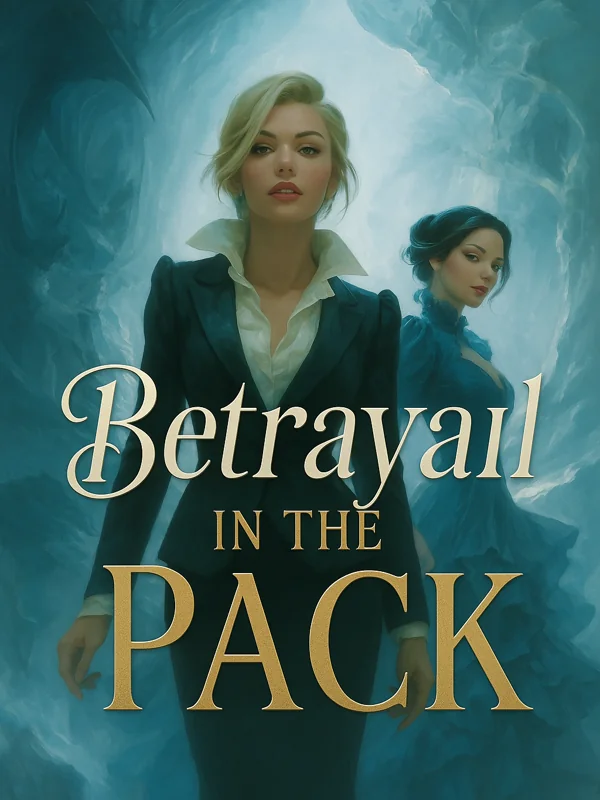
Elara, a loyal wolf of the Silver Moon pack, finds her life shattered when she is framed for a crime she didn't commit. Exiled and hunted by those she once called family, she must navigate a world of shadows to uncover the truth behind her betrayal. As she unravels a web of lies reaching the highest ranks of pack leadership, Elara discovers a hidden power within herself that could either save her kin or bring their entire world to an end.
Betrayed by My Fated Mate Novel Cover
9.6
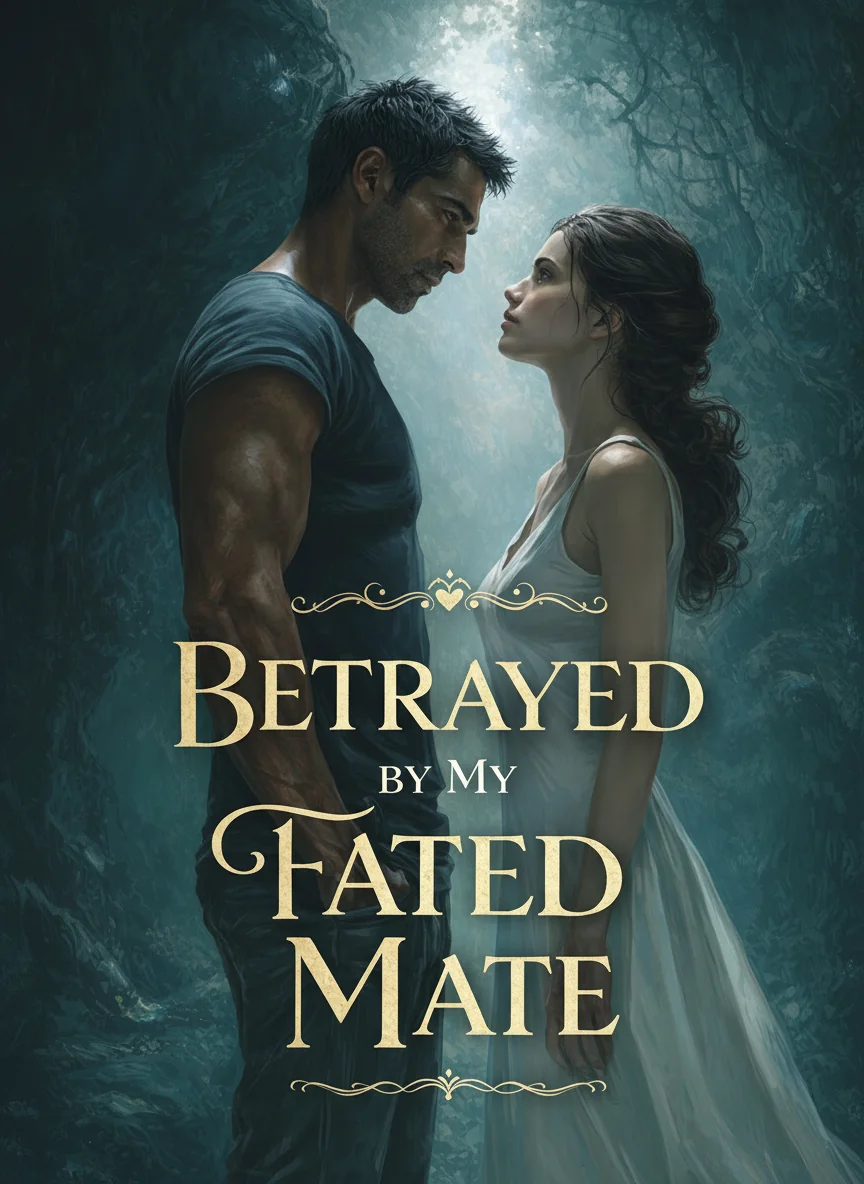
Elara believed finding her fated mate would bring her a lifetime of happiness. Instead, she is met with a cold-hearted rejection from the Alpha who was destined to protect her. Publicly humiliated and left broken by his betrayal, she must navigate the dangerous politics of the pack while healing her wounded soul. As secrets regarding their bloodlines emerge, Elara discovers a hidden strength that could change the fate of all werewolves.
Claiming His Luna Novel Cover
8.3
After a brutal attack leaves her pack in ruins, Elara is forced into a life of hiding to escape the ruthless Alpha who seeks to claim her. When she crosses paths with Silas, a powerful and mysterious lone wolf, an undeniable bond ignites between them. As secrets of her lineage surface, Elara must decide if she can trust Silas with her heart. Together, they face rising threats and a destiny that could redefine the future of all werewolf kind.
Falling for his human Luna  Novel Cover
9.2
When college freshman Betty stumbles into a forbidden room during her part-time shift at the museum, she accidentally opens a portal to a world ruled by werewolves. In the chaos, a cursed alpha claims her as his, marking her as the one bound to his fate. From that moment, Betty's ordinary life changes into a nightmare of bloodlines, betrayals, and battles she never believed could exist. Hunted by enemies and shunned by those who see her as an unworthy human, she must uncover the truth behind the alpha's curse before it consumes them both. Can Betty break free and return to the life she once knew or will she become the first human Luna in history, fighting to survive in a world that was never meant for her?
My Mate Faked Death to Steal My Luna Title Novel Cover
8.4
Betrayed by her twin sister and her own mate, Elena is framed for a crime she didn't commit. Her sister fakes her death to steal Elena’s rightful position as Luna, leaving Elena broken and exiled. Years later, Elena returns with a new identity and a powerful ally, ready to reclaim her title and expose the lies that destroyed her life. In this world of wolves and secrets, she will fight for justice and the love she truly deserves.
Red Moon Novel Cover
8.1
Blood Moon – Story Description Blood Moon is a dark, thrilling tale of forbidden attraction, supernatural rivalry, and the fine line between predator and prey. Set in the seemingly ordinary Silver Hollow College, the story unfolds in a world where vampires and werewolves secretly coexist alongside humans, each hiding their true powers while battling their own instincts, rival clans, and the pressures of legacy. In this shadowed world, every glance can hide a threat, every conversation can carry hidden meaning, and every full moon can unleash the beast within. At the heart of the story are Catrine Nella, a powerful young vampire, and Edwardo Zee, a disciplined yet conflicted werewolf. Catrine is sharp, cunning, and deadly, raised under the constant pressure of her ambitious step-sister who insists she feed on human blood to grow stronger. Catrine's natural talents in both magic and combat make her a force to be reckoned with, yet she struggles with morality, identity, and her own desire for control. Edwardo, on the other hand, is torn between his instincts as a wolf and the manipulations of his ruthless step-brother, who demands that he become a killer to claim alpha status. Edwardo wants to be a true alpha, not through bloodshed, but by protecting others and leading with honor-an ambition that sets him apart from his family and makes him both a target and a misfit among his kind. The story begins with a violent, electrifying encounter between Catrine and Edwardo in the forest during the full moon. Both are drawn by their own impulses-Catrine performing a vampire ritual, Edwardo struggling to control the wolf within-and the resulting clash is fierce, brutal, and unforgettable. This first meeting ignites a dangerous rivalry, with each recognizing the other's extraordinary abilities while also sensing something forbidden and magnetic between them. Though enemies by instinct and heritage, the connection they forge amidst conflict sets the stage for a tension-filled enemies-to-lovers narrative that drives the series forward. As the story unfolds, Silver Hollow College becomes a battlefield not just of physical strength but of intellect, cunning, and emotional power. Catrine and Edwardo test one another constantly-through subtle glances in class, tense encounters in crowded hallways, and increasingly dangerous confrontations in the forest. Each battle pushes them further, revealing vulnerabilities and strengths, and slowly transforms their relationship from animosity into fascination, grudging respect, and eventually, desire. Amidst this, both characters are confronted with the pressures of their families. Catrine's step-sister threatens her with weakness if she does not feed on human blood, while Edwardo's step-brother pressures him toward ruthless dominance, creating a constant tension that challenges their morality and tests the limits of their powers. At its core, Blood Moon is a story about choice and identity. It explores the struggle between instinct and conscience, power and restraint, hatred and attraction. It examines what it means to be strong-not just physically, but emotionally and morally-in a world where strength often comes at the cost of humanity. Through fast-paced action, supernatural intrigue, and the slow-burning, dangerous pull between Catrine and Edwardo, the story blends romance, suspense, and fantasy into a gripping narrative. It is a saga of blood and moonlight, of predators and secrets, of rivalry and passion, and of two young supernatural beings whose lives are forever intertwined by fate, desire, and the power of the Blood Moon.